Nigerian disability-inclusion advocates marking White Cane Safety Day on 15 October called for accessible urban infrastructure, stricter traffic enforcement and sustained public education. Channels Television reported that the calls focused on barriers affecting visually impaired people in Nigeria.
The Federal Nigerian Society for the Blind made a related appeal on 10 October, calling for policies to be put into effect to improve employment opportunities for visually impaired people. It also sought measures supporting safer independent mobility, placing access to work and movement at the centre of its requests.
Nigeria’s disability-rights law states that persons with disabilities have a right to access the physical environment and buildings on an equal basis with others. The provision sets out an accessibility standard for the built environment, while the recent calls have highlighted the importance of accessible urban infrastructure for visually impaired people.
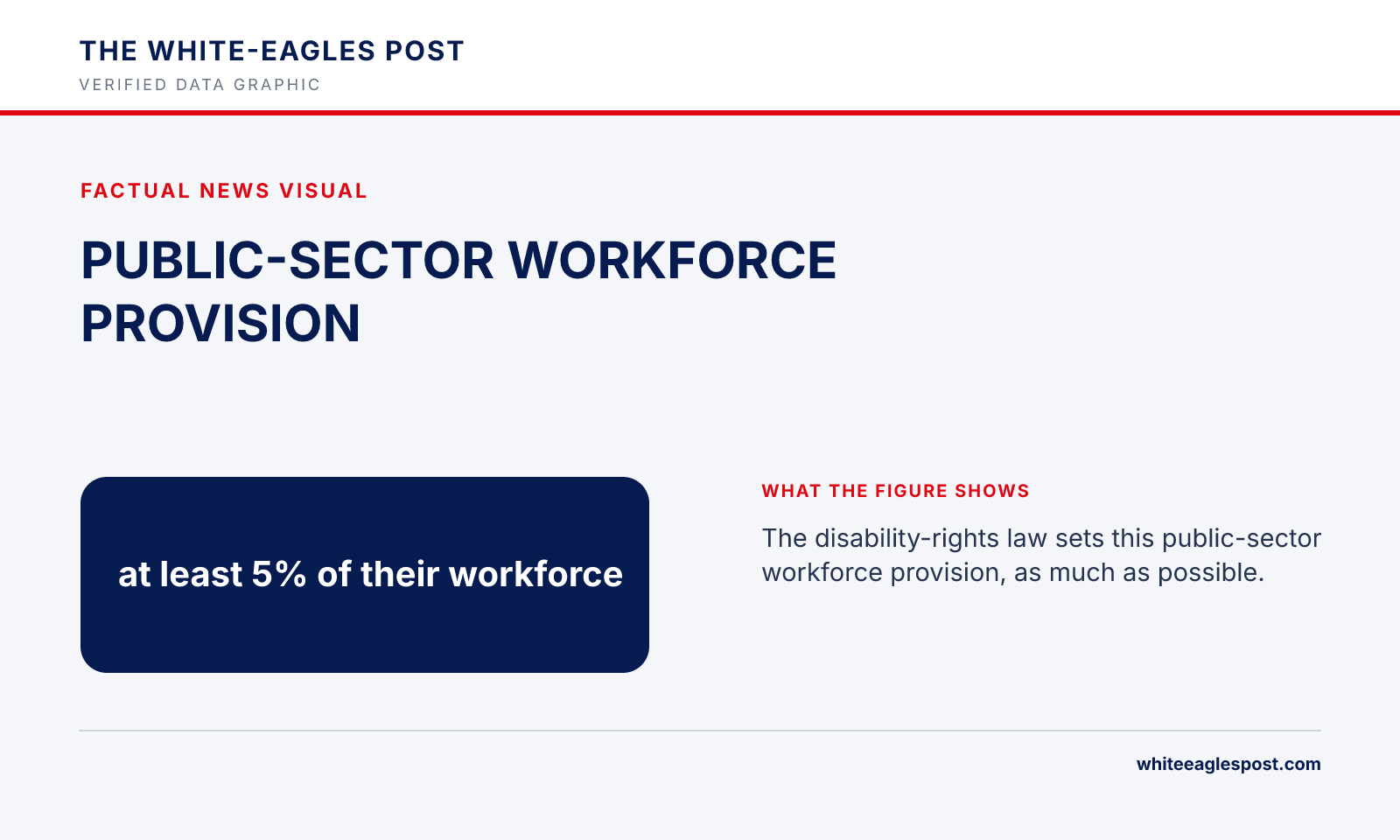
The law also requires public-sector employers, “as much as possible”, to have persons with disabilities make up at least 5% of their workforce. Separately, the National Commission for Persons with Disabilities says its employment-access framework is intended to remove barriers to meaningful formal employment and other economic opportunities for persons with disabilities.
The calls for public education accompanied requests for changes to physical surroundings and road use, with advocates seeking conditions that support independent movement alongside broader access to employment.