Nigeria’s 2027 Presidential Campaign Begins: Economy, Security and the Voter Take Centre Stage
By The White-Eagles Post
Nigeria is moving decisively into another important electoral season as political parties, prospective candidates and citizens turn their attention towards the 2027 general elections.
The contest will unfold against a backdrop of significant economic, security and social challenges, making the election more than a competition among political parties. It will also become a national debate about Nigeria's direction, leadership and priorities for the years ahead.
The Independent National Electoral Commission has begun preparations for the elections, including work around the voters' register and other electoral processes. Following changes introduced by the Electoral Act 2026, INEC indicated that adjustments were necessary to the timetable it had initially announced for the general election.
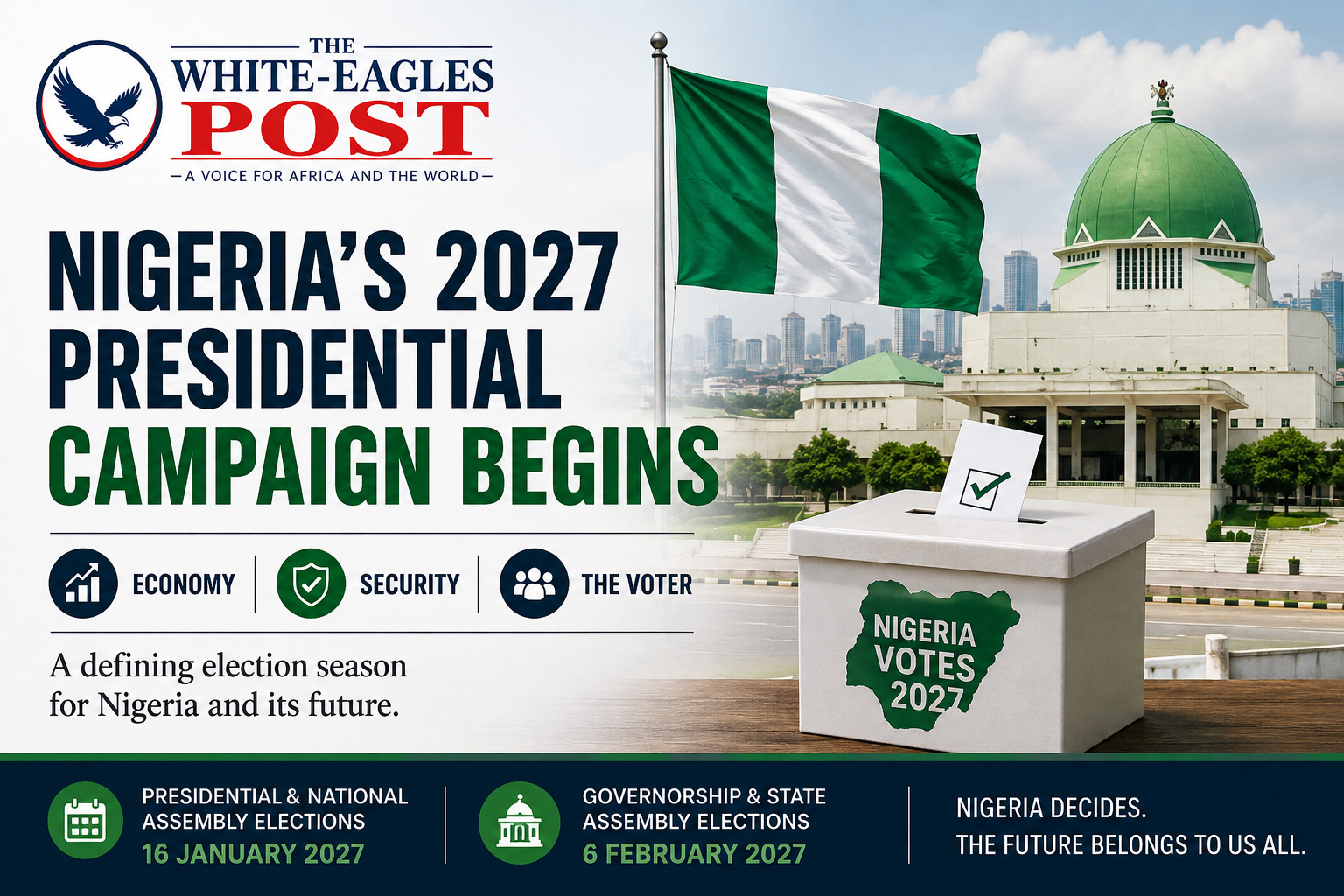
INEC's current official election listings identify 16 January 2027 for the Presidential and National Assembly elections and 6 February 2027 for the Governorship and State House of Assembly elections.
The economy will be central
For millions of Nigerians, the economy is likely to remain one of the defining issues of the campaign.
Household purchasing power, food prices, employment opportunities, business conditions, infrastructure and the broader cost of living will inevitably influence political conversations.
Candidates seeking the confidence of the electorate will therefore face pressure to move beyond campaign slogans and articulate credible programmes capable of improving economic conditions and expanding opportunities.
Young Nigerians, entrepreneurs and small-business owners in particular will be watching closely for policies addressing employment, access to finance, digital opportunities and sustainable economic growth.
Security remains a national priority
Security is equally likely to feature prominently.
Different parts of Nigeria continue to face distinct security challenges, and voters will expect candidates to demonstrate how they intend to strengthen public safety, intelligence capabilities, policing and national security institutions.
The debate should also extend beyond military responses to questions of economic opportunity, community development, education and other underlying factors that can contribute to insecurity.
The Nigerian voter
Ultimately, however, elections belong to the electorate.
Nigeria's democratic development depends not merely on candidates and political parties but also on citizens exercising their democratic rights responsibly.
INEC reported more than 93 million registered voters in its current public information, illustrating the enormous scale of Nigeria's electorate.
The months ahead should therefore provide an opportunity for greater voter education, issue-based political engagement and scrutiny of those seeking public office.
Citizens should ask difficult but necessary questions: What are the candidates proposing? Are their promises achievable? What records do they bring to the contest? And how will their programmes improve the lives of ordinary Nigerians?
Beyond personalities
Nigeria's political campaigns have historically generated intense debate around personalities, parties, ethnicity, religion and regional interests.
The 2027 election presents another opportunity to move the national conversation increasingly towards competence, policies, performance and measurable outcomes.
The electorate deserves detailed discussions about education, healthcare, infrastructure, security, technology, agriculture, industrialisation, public-sector reform, youth development and Nigeria's place in the global economy.
The diaspora also has an important stake in these conversations. Nigerians abroad remain connected to the country's development through remittances, investment, professional expertise, advocacy and family relationships.
A defining election season
Every general election represents a moment of national choice.
As Nigeria approaches 2027, political actors have a responsibility to conduct their campaigns peacefully and responsibly, while institutions must continue working to protect the credibility of the electoral process.
The media has an equally important responsibility: to interrogate claims, distinguish fact from political rhetoric, provide space for competing perspectives and give citizens the information necessary to make informed choices.
For The White-Eagles Post, our role throughout this election season will be clear.
We will follow the issues rather than simply the noise.
We will examine policies, scrutinise political claims, provide space for informed perspectives and report developments affecting Nigerians at home and across the diaspora.
As the road to 2027 gathers momentum, the central question is not simply who will win.
It is what kind of Nigeria voters want to build after the ballots have been counted.
Nigeria decides. The future belongs to us all.